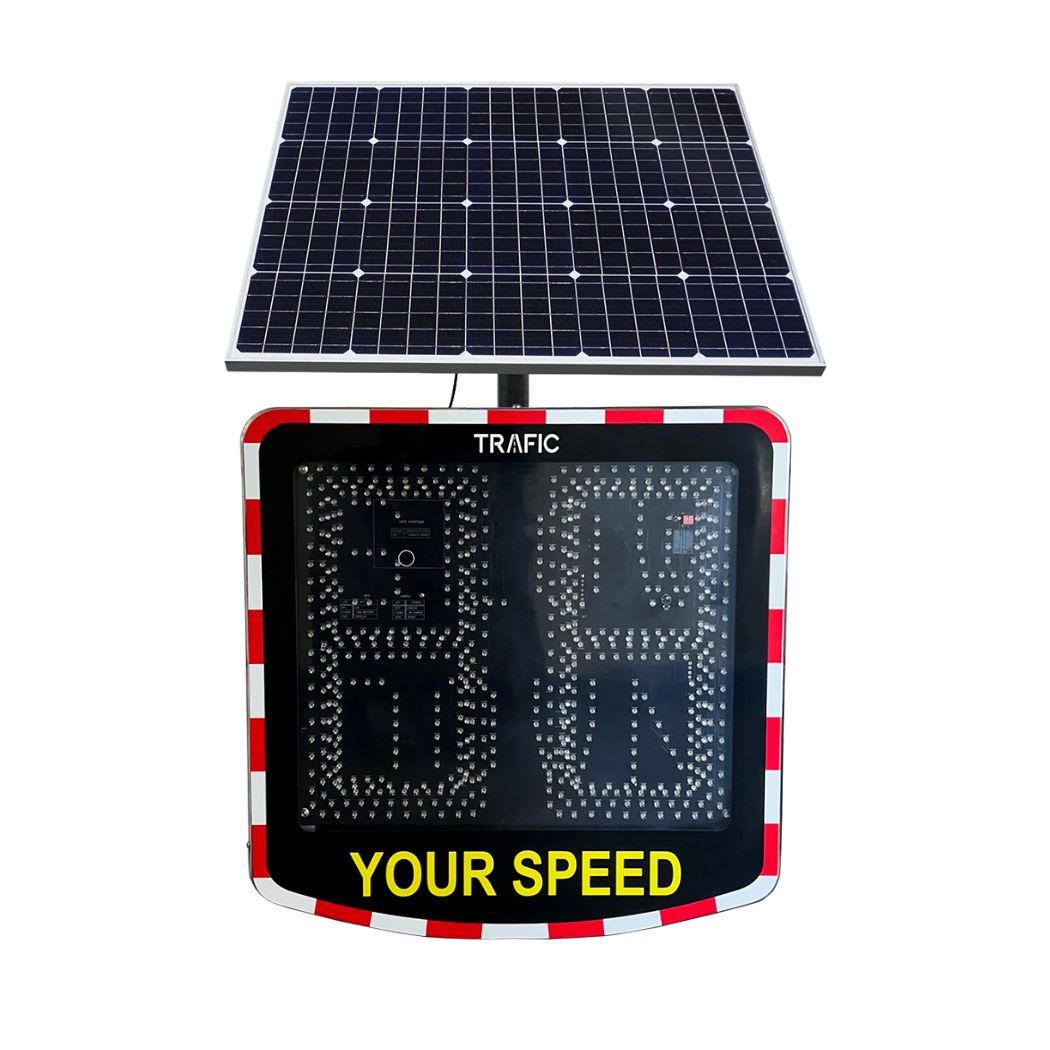
Why choose our “Sentinel” radar speed sign ?
- Designed and assembled by hand in our own workshop
• Large, highly visible characters combined with a compact design
• Excellent price-performance ratio
• Easily download and monitor traffic data via USB or Bluetooth
• Built-in voltage indicator allows you to quickly check battery status
• Covered by a 2-year warranty
How does the radar speed sign operate ?
This radar speed sign is delivered fully configured and ready for immediate use. Once installed, simply switch it on using the power button. The unit then operates independently without requiring any additional handling.
The display system has been engineered based on more than 20 years of expertise in radar speed sign development:
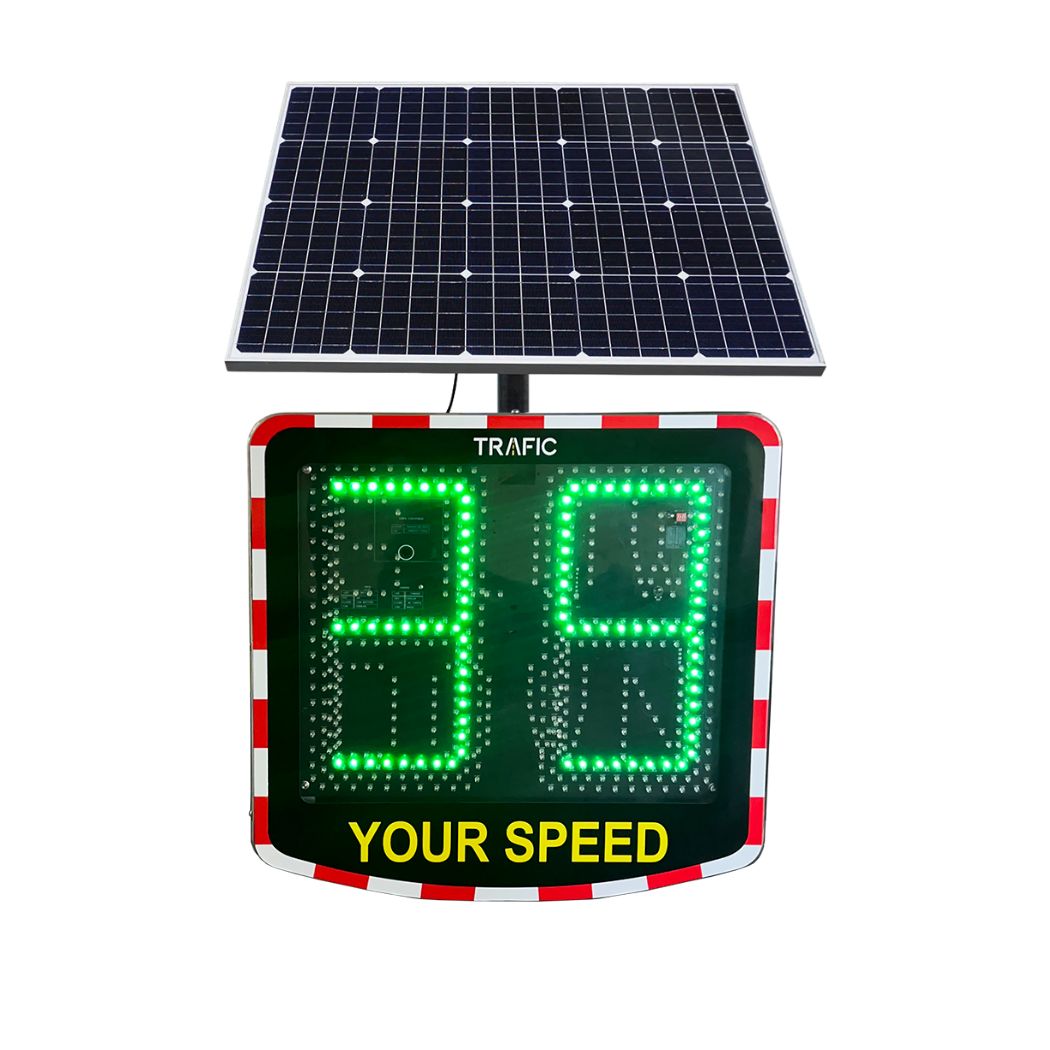
- When drivers respect the speed limit, their speed is shown in green
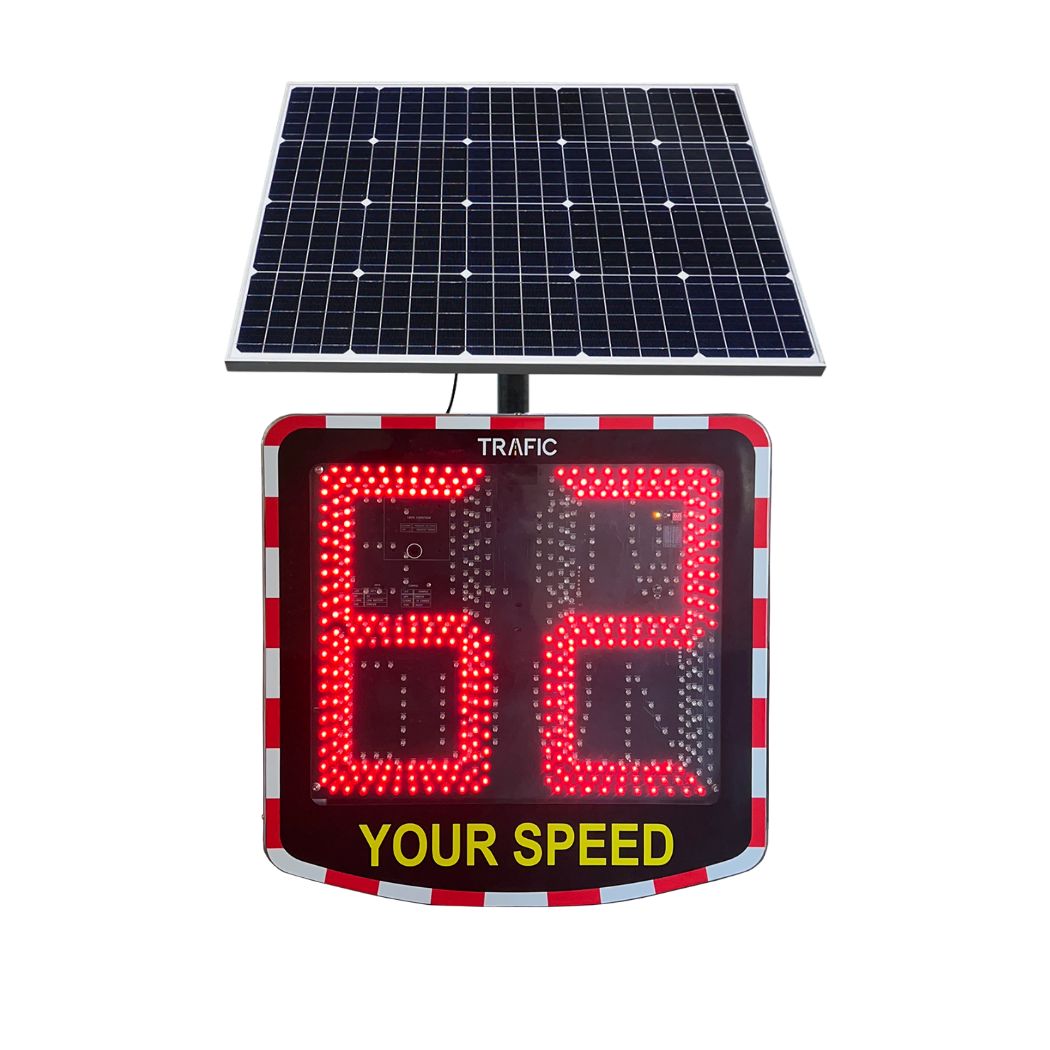
• If the speed limit is exceeded, the speed appears in red with three LED lines
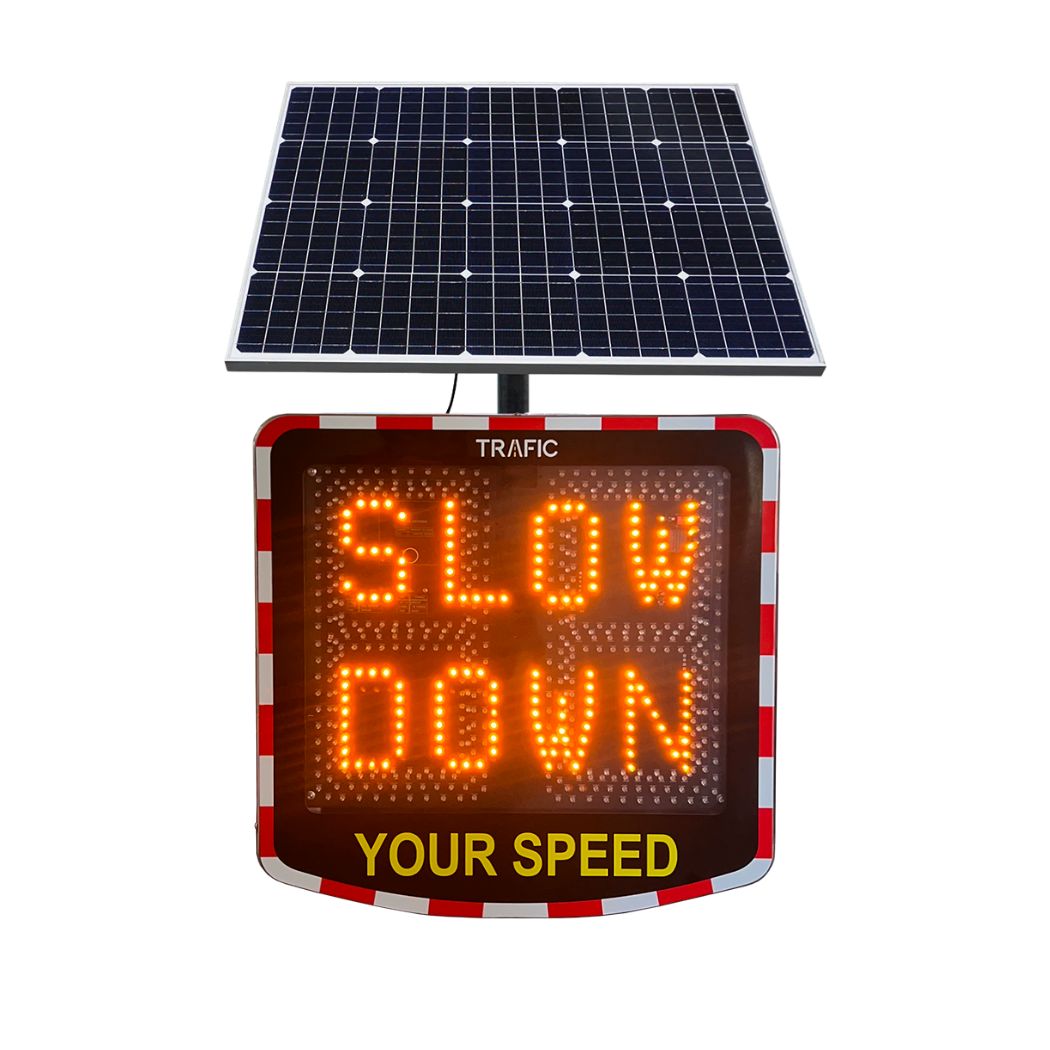
• When a predefined higher threshold is reached, the speed is no longer displayed and a “Slow Down” warning message is shown instead
This anti-challenge feature discourages drivers from attempting to beat the radar and helps reduce unsafe driving behavior.
Additionally, the flashing display enhances visibility and captures driver attention more effectively, reinforcing the safety message.
Installation and power options
For best performance, the radar speed sign should be mounted on the right-hand side of the road along a straight and level section. The front panel must face the traffic lane and be positioned perpendicular to the ground.
Installation height guidelines:
• The bottom of the sign should be installed between 2.20 m and 3.00 m above ground level
• Leave approximately 1 m between the road edge and the sign
• Maintain a lateral clearance of about 1.40 m from the roadway edge
The mounting method and power supply depend on the installation environment. As the manufacturer, we provide multiple power solutions tailored to your needs.
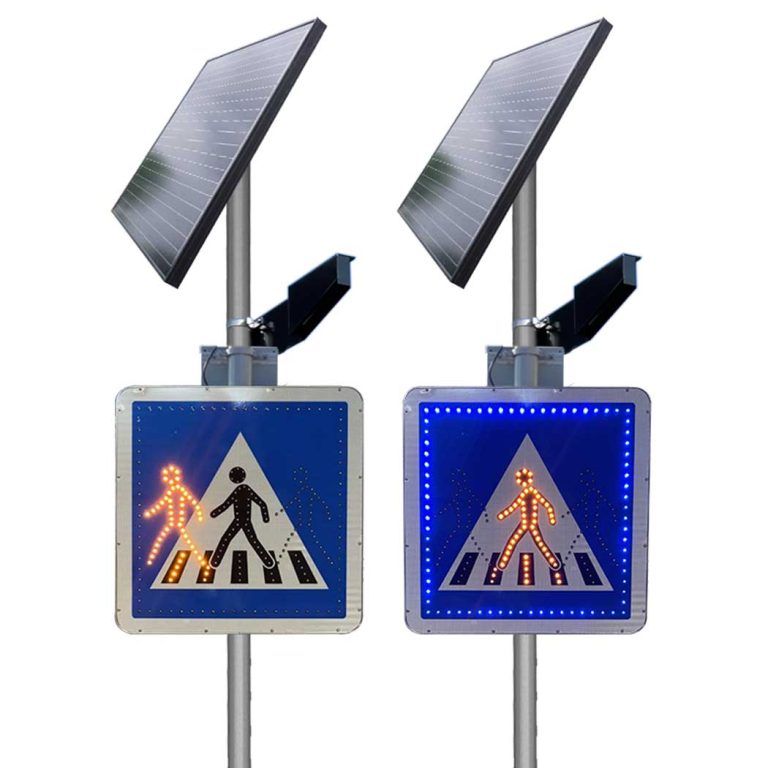
For solar installations, we use an 85 Wp solar panel connected to three 7 Ah batteries. The solar panel includes a built-in charge controller to maintain battery levels. With this configuration, the system can typically operate for around 4 to 5 days without sunlight, depending on traffic volume and environmental conditions.